


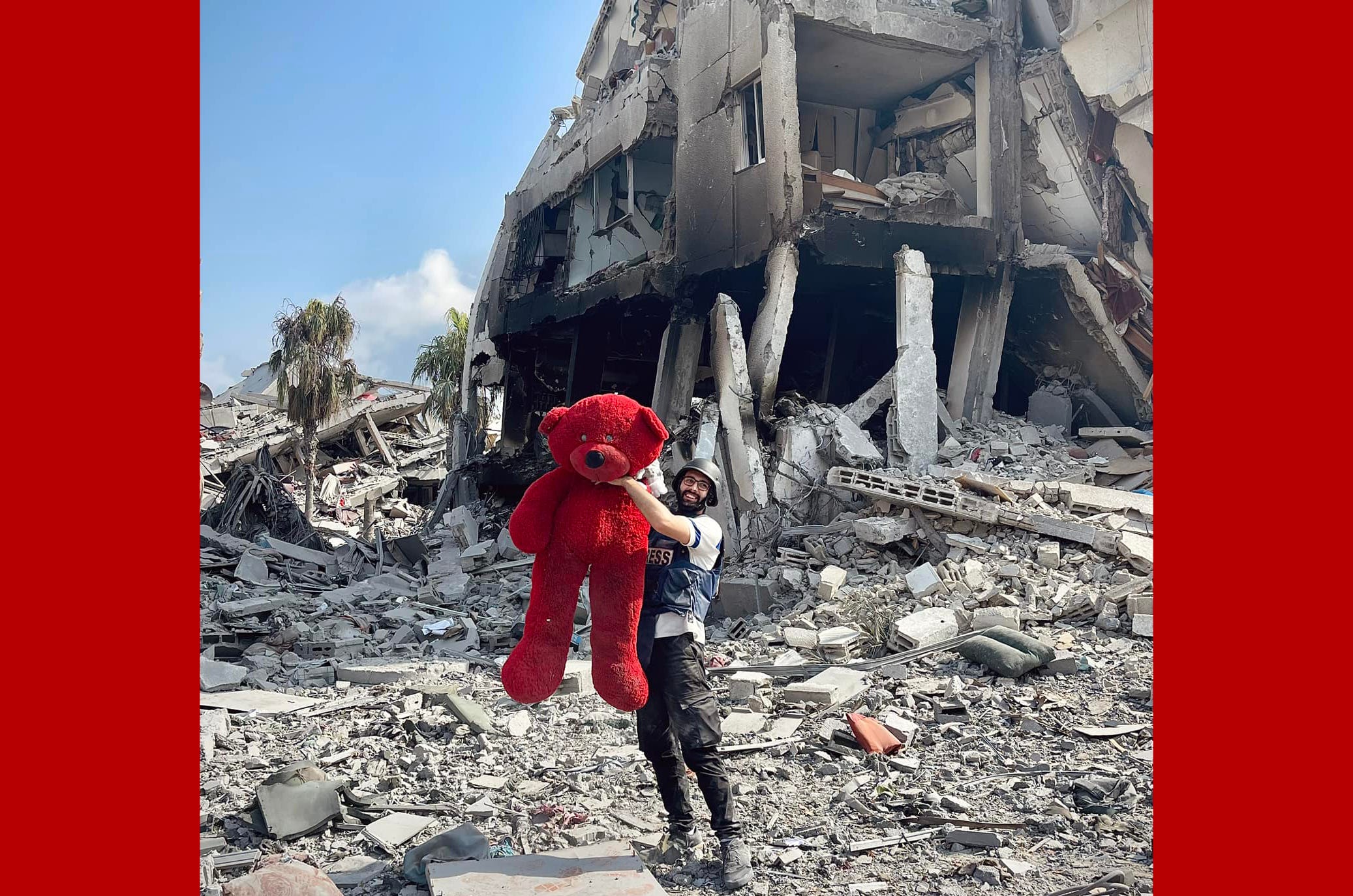
When you are about to turn 70, what else would you do but look up the number of genocides perpetrated on Earth since you were born?
Why? Because, like you, I want to live in a world where genocide is unthinkable, undoable.
A genocide-free world can only come about if we stop pretending that only “monsters,” or “inhuman” humans, or “evil” people, or those who have “lost their humanity” commit and are complicit in genocide.
If we want real change, we have to face ourselves with eyes wide open. Humans commit genocide, a lot of genocide. Genocide is human. And complicity in genocide is the norm.
Crucially, so is being epigenetically marked or traumatized by genocide.
Genocide and trauma by the numbers
Approximately 52 million people in 36 countries have died as a result of 55 genocides from 1956 to 2026. This represents nearly 20% of the countries on Earth.1
Let it sink in. Around 52 million people have been slaughtered, starved, or otherwise unalived as a result of the constant stream of genocides on earth just since 1956, the year of my birth.
Those millions upon millions have loved ones: children, partners, friends, parents, grandparents, and grandchildren. Every single one of those loved ones has been affected by genocide.
But the memory of trauma and the effects of trauma are not just communicated by direct experiences or story-telling across generations. Epigenetic inheritance plays a huge role in the dissemination of genocide trauma.
Intergenerational inheritance of trauma affects, on a cellular level, fetuses developing in a traumatic environment and the sperm of males who survive genocide and then go on to father children.
Transgenerational inheritance affects, at a cellular level, those who have no first-hand experience of a traumatic event. It plays a significant role across at least three generations, with some effects documented out to the fourth generation.2
This is not a Western scientific conclusion, but given the numbers and the persistence of embodied memory, both ordinary and epigenetic, it is reasonable to assume that there are hundreds and hundreds of millions of people on earth who are marked by the experience of genocide.
My Genocide Childhood
I have been aware of and affected by war and genocide since I was a young child.
Growing up, our tv screen was regularly visited by heart-wrenching images of genocides in Cambodia, Bangladesh, Tibet, and Sudan. My best friend in junior high was a refugee from genocide in Indonesia.
And both of my parents identified as Jewish, so I was born into the experience and stories of a genocide.
I was also born in a country built on multiple genocides, the facts of which I was not entirely unaware as my parents were somewhat politically “left.”
The deep feelings of compassion, pain, and anger that I experienced as a child have shaped the remainder of my life.
I have also experienced some persistent evidence of epigenetic or karmic effects from whatever genocides I’m connected to by birth or rebirth.
In this, I think I am accompanied by too many of my fellow humans.
Most recently, I had a special and especially vivid dream.
I was an infant laying on my back on a street in the middle of an active war zone.
Panicking adults were running past me. I could hear explosions and gunfire.
I could not see my mother. I started screaming in terror and longing, an inarticulate cry for her to come to me.
That was the entirety of the dream.
My mother died when I was 32 years old. After that, I had many dreams of her rebirth.
She was leading an ordinary life, but in that life, she did not recognize me. In those dreams, I would feel a version of the desperate bereftment of that infant in wartime.
These connected dreams illustrate, at least to me, how experiences from many times continue to echo through us.
What I want to say is. . .
Many more of us have been affected by genocide than we have acknowledged.
Genocide cannot be contained in the “evil,” or “inhuman.” We have many capacities for compassion and kindness and tenderness, but also for cruelty and mass murder. All of it is who we humans are.
The cruelty and depravity of genocide is on a spectrum with some of our ordinary, everyday behaviors. And some of our ordinary everyday behaviors enable genocide even if we are definitively against genocide.
We have to own all of it if we want to change, to heal, to base our societies and cultures on kindness, belonging, and connection rather than on competition, domination, divisions, and borders.
As we say in my spiritual traditions, we have to start from where we are. We can’t grow spiritually based on a fantasy.
Genocides R Us. Not just elsewhere, but here. Not just outside, but in the cells of our bodies.
Knowing that, we can work with that. We can change. We can heal. Of that I have no doubt because the more fundamental basis of life is wisdom.
And we are that wisdom more than we are genocide.
with infinite love, Shambhavi

Kindred 108 is 100% supported by readers like you. If you benefit from the offerings here, please consider subscribing, or even offering a paid subscription. Thank you!
Not quite ready to fire up a paid subscription, but want to show your appreciation?

Please join Shambhavi and the Jaya Kula community for satsang & kirtan every Sunday at 3:00pm Pacific. Come in person to 1215 SE 8th Ave, Portland, OR, or join Jaya Kula’s newsletter to get the Zoom link for satsang. You can also listen to my podcast—Satsang with Shambhavi—wherever podcasts are found.
This estimate derives from a Perplexity A.I. deep research report charting 55 genocides from 1956 to today, including Gaza. It tallies all deaths from genocides that have been identified by the UN, human‑rights ngos, and academic consensus.
This information derives from a Perplexity A.I. deep research report on the kinds of epigenetic memory and their longevity.
Thank you for this Shambhavi..... time to reclaim our wisdom